


Choosing between a lithium motorcycle battery and a lead-acid battery is not simply a question of which technology is newer. For riders, the better choice depends on starting performance, weight, charging conditions, riding habits, climate, and budget. For distributors and motorcycle brands, the decision also involves product positioning, warranty risk, supplier capability, and total cost of ownership.
A modern lithium battery can offer a major weight advantage and strong power-to-weight performance, while lead-acid remains a mature, widely available, and cost-effective solution. The right choice is therefore the one that matches the motorcycle and its intended application-not necessarily the most expensive option.

Lithium vs Lead Acid Motorcycle Battery at a Glance
The following comparison provides a practical starting point before looking at individual specifications.
| Feature | Lithium Motorcycle Battery | Lead-Acid Motorcycle Battery |
|---|---|---|
| Weight | Generally much lower | Generally higher |
| Initial Cost | Higher | Lower |
| Power-to-Weight Ratio | Excellent potential | Moderate |
| Starting Performance | Strong when correctly specified | Proven and reliable |
| Maintenance | Generally low | Depends on battery design |
| Charging Requirements | More specific | Widely established |
| Availability | Growing | Very broad |
| Best For | Performance and weight-sensitive applications | Cost-conscious and broad-market applications |
The important point is that neither technology wins every category. GS Yuasa, for example, continues to offer multiple lead-acid motorcycle battery technologies, including conventional and AGM designs, showing that lead-acid remains an important solution across different motorcycle applications.
What Is the Difference Between Lithium and Lead Acid Motorcycle Batteries?
Different Technologies, Different Design Priorities
Traditional lead-acid batteries use lead plates and an electrolyte to store and deliver electrical energy. Depending on the design, they may require different levels of maintenance. Modern maintenance-free and AGM versions can provide improved convenience, vibration resistance, and starting performance.
Lithium motorcycle batteries use lithium-based cells and typically incorporate a battery management system (BMS). This allows the battery pack to be designed around high power output while keeping weight low.
The technology itself, however, does not guarantee performance. Cell quality, battery construction, BMS design, charging conditions, and quality control all influence the final product.
Which Is Lighter: Lithium or Lead Acid?
Why Weight Matters on a Motorcycle
Weight is one of the clearest advantages of lithium technology. A motorcycle battery is relatively small, so reducing several kilograms from this component can be meaningful, particularly on sport and performance-oriented motorcycles.
Lower battery weight can be valuable for:
Sport motorcycles
Racing applications
Performance upgrades
Lightweight motorcycles
Premium motorcycle products
However, buyers should not choose a battery based on weight alone. A lightweight battery still needs sufficient starting current, correct dimensions, and compatibility with the motorcycle's electrical system.
Lower weight does not automatically mean better performance.
Which Battery Provides Better Starting Performance?
Starting performance is often more important than capacity for a motorcycle starter battery.
When comparing lithium and lead-acid products, look beyond marketing terms such as "high power." Check:
Rated capacity
CCA or starting current
Test temperature
Test method
Engine application
Battery voltage
For example, GS Yuasa's motorcycle specifications list both capacity and CCA, demonstrating why these measurements should be evaluated separately when comparing batteries.
For OEM buyers, asking a manufacturer for the test conditions behind its starting-current specification is especially useful. Two batteries may show similar headline numbers but perform differently under actual testing conditions.
Which Battery Lasts Longer?
There is no universal lifespan that applies to every lithium or lead-acid motorcycle battery.
Battery life depends on:
Depth and frequency of discharge
Charging system condition
Operating temperature
Storage conditions
Vibration
Battery construction
Cell or plate quality
Maintenance practices
GS Yuasa recommends replacing a motorcycle battery with one that meets or exceeds the original battery's specifications, noting that an unsuitable replacement can contribute to reduced service life or premature failure.
Therefore, buyers should compare expected service conditions and test data, rather than accepting a fixed lifespan claim without context.
Which Is Better for Cold Weather?
Cold-weather performance deserves special attention.
Lead-acid batteries have a long history of motorcycle use and established cold-start characteristics. Lithium batteries can also provide strong starting performance, but their behavior in low temperatures depends on the lithium chemistry, cell design, BMS, and battery manufacturer's specifications.
For motorcycles used in cold climates, ask the supplier about:
Minimum operating temperature
Charging temperature range
Low-temperature protection
Starting performance in cold conditions
Storage recommendations
This is particularly important for international distributors. A battery designed for a warm market should not automatically be assumed suitable for a cold-weather market.
Which Motorcycle Battery Is More Cost-Effective?
The cheapest battery at purchase is not always the lowest-cost solution over its service life.
A better calculation is Total Cost of Ownership (TCO):
Purchase price + charging requirements + maintenance + replacement frequency + warranty costs + logistics
Lead-acid generally has a lower initial purchase price and broad aftermarket availability. Lithium normally requires a higher initial investment, but its lower weight and power-to-weight characteristics can create additional value in premium or performance-focused applications.
The correct comparison therefore depends on the customer's market position.
Lithium or Lead Acid: Which Should You Choose?
Choose lithium when:
Weight reduction is important.
The motorcycle is performance-focused.
Power-to-weight ratio is a key selling point.
The charging system is compatible.
The target market accepts a higher initial product price.
You are developing a premium or lightweight motorcycle product.
Choose lead-acid when:
Initial purchase cost is the main concern.
Broad replacement availability matters.
The motorcycle already uses a proven lead-acid specification.
Customers prioritize familiar technology.
The application does not benefit significantly from weight reduction.
The motorcycle battery market itself is not moving toward one technology overnight. GS Yuasa's market analysis has projected continued demand for lead-acid motorcycle batteries while also recognizing growing demand for lithium solutions, reinforcing the point that both technologies can have a role depending on application and market.
What Should Buyers Ask a Motorcycle Battery Manufacturer?
If you are purchasing for a motorcycle brand, wholesale business, or private-label project, do not evaluate suppliers only by unit price.
Ask for:
Battery chemistry and cell specifications
Rated capacity and starting-current test data
BMS protection functions
Charging voltage and current requirements
Operating and storage temperature
Cycle-life test conditions
Quality-control and inspection procedures
Warranty terms
MOQ and production capacity
OEM/ODM and private-label capabilities
A professional factory should be able to explain why a particular battery specification fits your target motorcycle, rather than simply sending a product catalog.
Why Choose Jack Power for Lithium Motorcycle Battery OEM?
For overseas motorcycle brands, distributors, and wholesalers, the battery is only one part of the project. The more important question is whether the manufacturer can consistently produce the required specification.
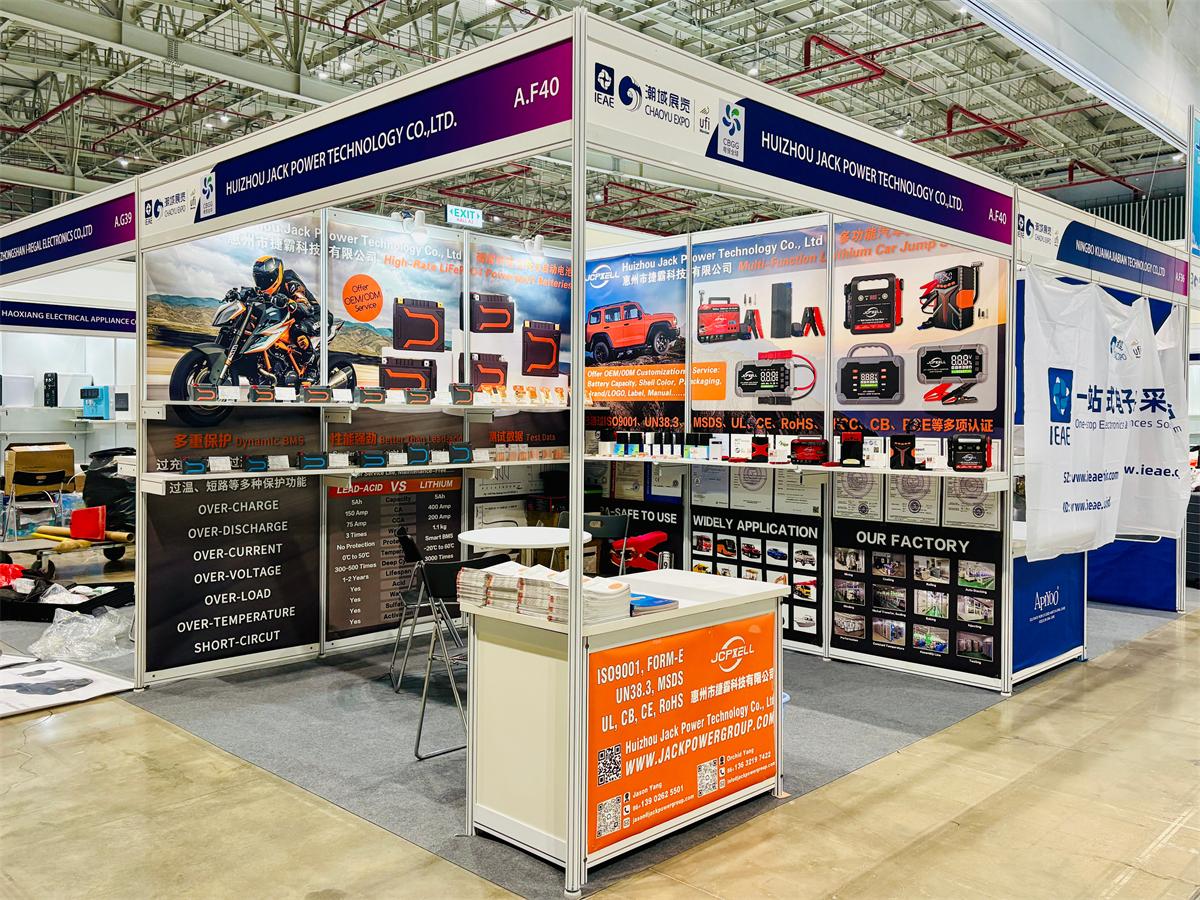
Jack Power Technology Co., Ltd. has more than 10 years of lithium battery industry experience, over 3,000 m² of factory space, and 5 battery assembly lines. Its products have been exported to more than 30 countries, serving over 100 global customers across automotive, motorcycle, outdoor power, and emergency-starting applications.
For OEM and ODM projects, Jack Power can work around target motorcycle models, battery dimensions, capacity, starting requirements, BMS configuration, packaging, and private-label specifications.
If you are comparing lithium and lead-acid solutions for your motorcycle battery business, send Jack Power your target specifications and application requirements for a more suitable OEM battery recommendation.


FAQ
Q: Is a lithium motorcycle battery better than a lead-acid battery?
A: Not in every application. Lithium offers major advantages in weight and power-to-weight performance, while lead-acid provides lower initial cost and broad market availability.
Q: Does lithium last longer than lead acid?
A: It can, but actual service life depends on battery design, charging conditions, temperature, discharge depth, storage, and usage. Manufacturer test data is more useful than a general lifespan claim.
Q: Is a lithium motorcycle battery worth the higher price?
A: It can be worthwhile when low weight, performance, or premium product positioning matters. For cost-sensitive applications, lead-acid may provide better overall value.
Q: Can I replace my lead-acid motorcycle battery with lithium?
A: Potentially, but you must confirm voltage, dimensions, terminal configuration, starting requirements, and charging-system compatibility before replacing it.
Q: Which is better for cold weather, lithium or lead acid?
A: Neither should be selected based only on battery chemistry. Check the specific battery's low-temperature operating and charging specifications and its tested starting performance.
Q: What should an OEM buyer compare besides battery price?
A: Compare starting-current test data, cells, BMS, charging requirements, quality control, warranty, MOQ, production capacity, certifications, and supplier experience. These factors can have a major impact on long-term product cost and customer satisfaction.