

From mobile phones and laptops to car jump starters and portable power banks, lithium batteries have become the mainstream power source.
Why are lithium batteries more popular than traditional lead-acid batteries? Let's take a closer look at their advantages.
1. Lightweight design, easier to carry
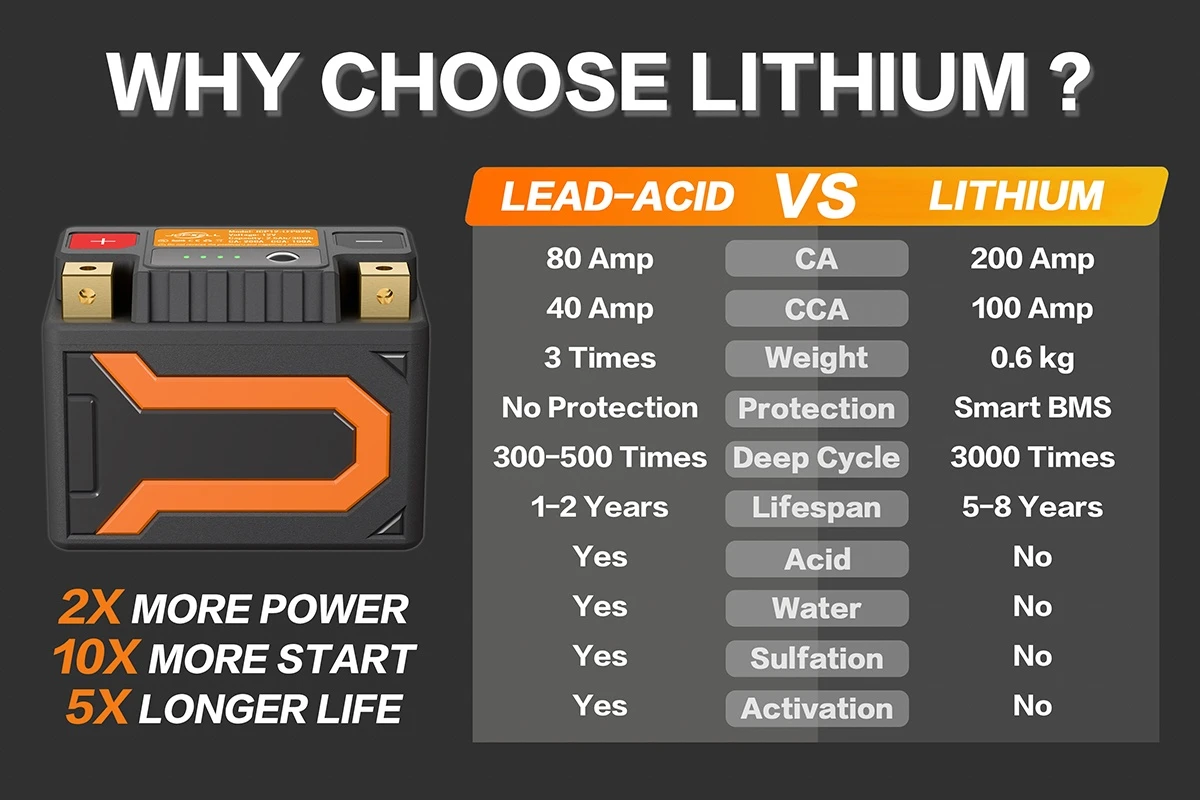
One of the biggest advantages of lithium batteries is their light weight. Compared to lead-acid batteries, lithium batteries are approximately 60%-70% lighter.
This is a very practical advantage for people who frequently travel, camp, or work outdoors.
2. Higher energy density
Lithium batteries have two to three times the energy density of traditional batteries. Simply put, a lithium battery can store more electrical energy in the same size cell.
Whether for starting a car or providing emergency power, lithium batteries offer reliable output.
3. More durable
Traditional lead-acid batteries typically only last about 300-500 charge-discharge cycles, while high-quality lithium batteries can have a cycle life of up to 3000 cycles.
That means lithium batteries can be used for 3 to 5 years or even longer, far exceeding the lifespan of other types of batteries.
4. Strong Starting Capacity
Lithium batteries maintain a stable voltage output during discharge.
Especially in winter or low-temperature environments, lithium batteries remain stable and are less prone to starting problems.
This is why many car and motorcycle manufacturers prefer lithium batteries.
5. Multiple Safety Protections for Greater Peace of Mind
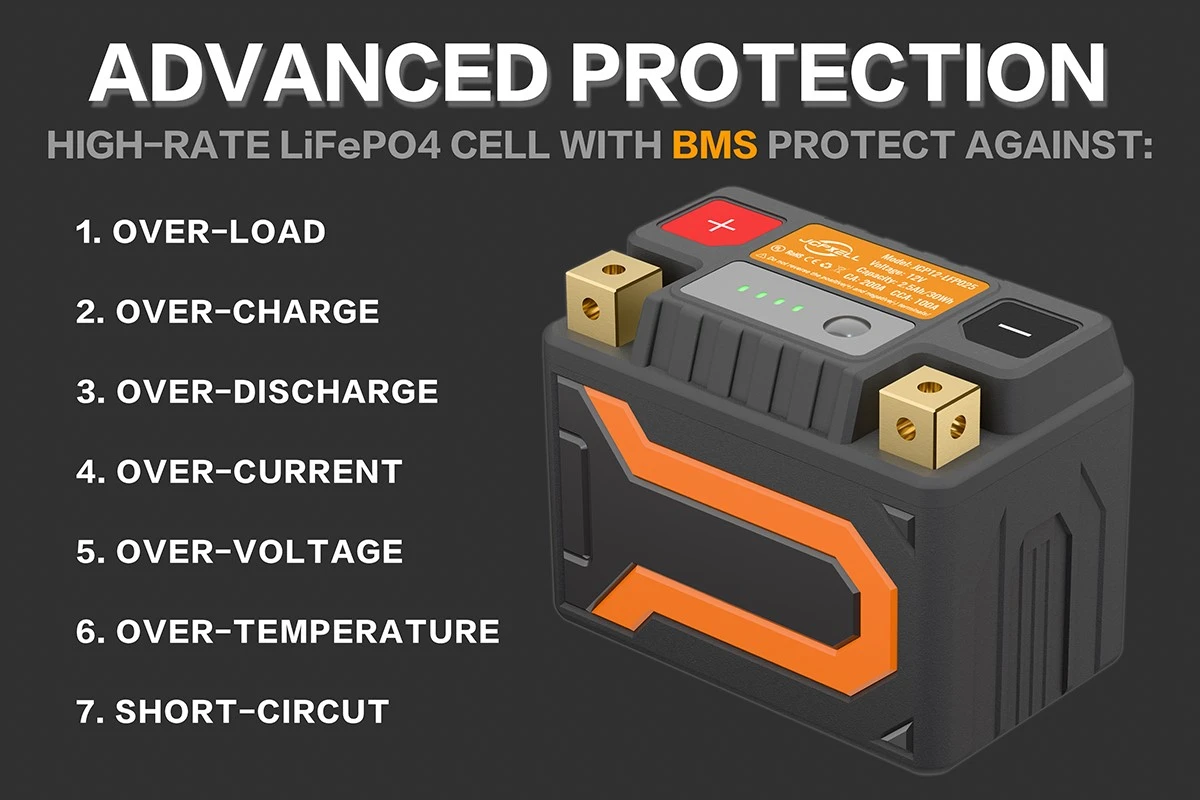
Modern lithium batteries are equipped with a Battery Management System (BMS) to prevent:
Overcharging
Overdischarging
Overheating
Short Circuit
Reverse Connection
These protective measures effectively prevent safety accidents and extend battery life.
6. Environmentally Friendly and Pollution-Free
Lithium batteries do not contain harmful heavy metals such as lead, mercury, and cadmium, and do not pollute the environment. In contrast, lead-acid batteries contain large amounts of lead and acid, which can easily pollute soil and water sources if improperly disposed of.
Therefore, lithium batteries not only have superior performance but also align better with current global environmental trends.
7. Easier Storage
Lithium batteries have a very low self-discharge rate, with a monthly power loss of less than 3%. Even after long periods of non-use, they maintain a full charge and are ready to use immediately.
This is crucial for automotive emergency power supplies and backup batteries.
8. Strong Temperature Adaptability
High-quality lithium batteries can operate stably between -20°C and 60°C. They perform normally in both cold and hot environments without easily failing.
9. Wide Range of Applications
Lithium batteries are widely used in various industries, including:
Automotive emergency jump starters
Motorcycle batteries
Portable outdoor power supplies
Power tools
Home energy storage systems
Solar energy storage devices