

Under normal use, a high-quality motorcycle battery can last 2-3 years. However, many owners have encountered a frustrating problem: the battery keeps dying. Even after a full charge, the vehicle won't start after a few days; even after replacing the battery, the same problem persists.
This article will analyze in detail the reasons why motorcycle batteries repeatedly die and provide practical testing and solutions to help you find the root cause and avoid frequent battery replacements.
Is It Normal for a Motorcycle Battery to Keep Dying?
Is it normal for a motorcycle battery to frequently run out of power?
The answer is no.
Under normal circumstances, a healthy motorcycle battery should be able to work stably for 2-3 years without frequently experiencing power depletion.
The average lifespan of different types of motorcycle batteries is as follows:
|
Battery Type |
Average Lifespan |
|
Lead-Acid Battery |
2–3 Years |
|
AGM Battery |
3–5 Years |
|
Gel Battery |
3–5 Years |
|
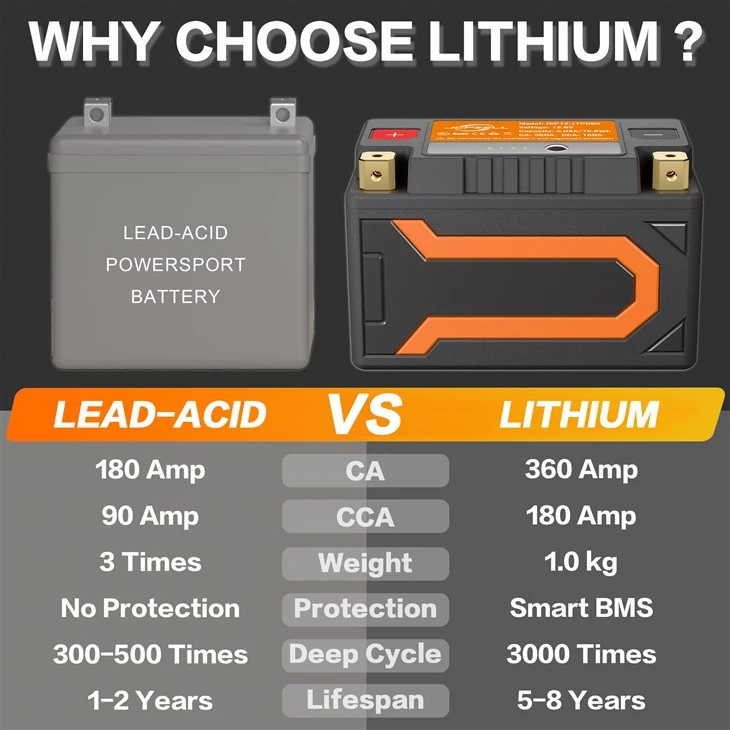
Lithium Battery |
5–10 Years |
The Most Common Cause: The Motorcycle Is Not Being Ridden Enough
Even when the motorcycle is off, several electronic devices continue to consume power. For example, the ECU memory module, digital instrument cluster, GPS tracker, anti-theft system, and other electronic accessories all generate standby current. If the vehicle is not ridden for an extended period, the battery cannot be recharged through the charging system, and these continuous, small power consumptions gradually deplete the battery's stored energy.

How Long Can a Motorcycle Sit Before the Battery Dies?
How long a motorcycle can be parked without its battery dying depends primarily on the type and condition of the battery, as well as the vehicle's standby power consumption.
|
Battery Type |
Estimated Storage Time* |
|
Flooded Lead-Acid Battery |
2–4 Weeks |
|
AGM Battery |
1–2 Months |
|
Gel Battery |
1–3 Months |
|
Lithium Battery |
2–6 Months |
It's important to note that these figures only apply to healthy, fully charged batteries. If the battery has been used for many years or has experienced capacity degradation, the actual parking time may be significantly lower than these figures.
Furthermore, vehicles equipped with GPS, anti-theft devices, or other modified electronic devices will experience a significantly faster battery discharge rate. Therefore, even if the vehicle is not being ridden, it is recommended to start the engine or use a smart maintenance charger to top up the battery every few weeks.
Why Deep Discharge Damages Batteries
Deep discharge is one of the main causes of premature battery failure in motorcycles. When a battery's charge level remains low for an extended period, irreversible chemical changes occur internally.
For lead-acid batteries, when the voltage remains below 12V, lead sulfate crystals begin to form on the surface of the plates. This process is called sulfation. In the early stages of sulfation, some crystals can be recovered through proper charging. However, if the battery remains in a state of prolonged undercharge, the crystals will gradually harden and cover the plate surface.
Ultimately, this leads to:
* Reduced battery capacity
* Weakened starting capability
* Reduced charging efficiency
* Increased internal resistance
* Permanent battery failure
The situation is different for lithium-ion batteries. When the voltage of a single cell is too low, the BMS (Battery Management System) will automatically cut off the output to protect the cell. Although this protection mechanism can prevent further damage, if the cell is kept in an extremely low voltage state for a long time, irreversible capacity loss may still occur. Therefore, for both lead-acid and lithium-ion batteries, prolonged deep discharge will significantly shorten their lifespan.
A Faulty Charging System May Be Draining Your Battery
Many car owners find that the problem persists even after replacing their batteries. In fact, if the charging system malfunctions, even a brand new battery will experience a rapid decline in charge within a short period.
How the Charging System Works
Motorcycle batteries do not rely on external chargers for continuous power. During daily riding, the battery primarily relies on the vehicle's own charging system to replenish its charge.
A charging system typically consists of the following key components:
· Stator
· Regulator/Rectifier
· Charging Wires
· Connectors
When the engine is running, the stator generates alternating current (AC). The rectifier and regulator are responsible for converting the AC to direct current (DC) and controlling the output voltage to remain within a safe range. The electrical energy is then transferred to the battery through the circuitry, replenishing the battery and powering the vehicle's equipment. If any of these components malfunctions, the battery may not be able to charge properly.
Signs of Charging System Problems
Charging system malfunctions often exhibit some obvious symptoms.
For example:
· Frequent battery depletion
· Significantly shortened new battery life
· Headlights flickering
· Abnormal instrument panel display
· Difficulty starting
· Battery frequently requires external charging
Many car owners mistakenly believe that this is caused by battery aging. In fact, the problem often comes from the vehicle itself. If the same problem still occurs after replacing more than two batteries in a row, the charging system should be checked as a priority.
How to Check Charging Voltage
The simplest way to check the charging system is using a digital multimeter. First, measure the voltage when the vehicle is off.
Under normal circumstances: 12.6V-12.8V indicates the battery is fully charged. Then start the engine and maintain the engine speed at approximately 3000 RPM, and measure the battery voltage again. The normal charging voltage should be 13.5V-14.5V. If it is below 13.5V, it indicates insufficient charging. If it is above 15V, it indicates overcharging.

Poor Battery Quality Can Lead to Early Failure
Many motorcycle owners, when experiencing frequent battery drain, often suspect their usage habits or a problem with the vehicle's charging system. However, in reality, the quality of the battery itself is also a significant factor affecting its lifespan.
Some low-priced batteries, in order to reduce production costs, may reduce the use of key materials or simplify the production process. While these products may start the motorcycle normally when initially purchased, their performance often degrades rapidly with increased use.
Signs of a Low-Quality Battery
While most motorcycle batteries may look similar, low-quality batteries typically exhibit several noticeable characteristics during actual use. Understanding these symptoms can help owners quickly identify potential battery quality issues.
Rapid Charge Drop
A healthy motorcycle battery should retain sufficient starting charge even after being parked for several weeks. If the voltage drops significantly within a few days of a full charge, or if the engine fails to start, it may indicate insufficient internal capacity or a high self-discharge rate.
Poor Charge Retention
Some batteries show a full charge after charging but quickly lose charge after a short period of inactivity. This usually indicates a problem with the battery's internal plates, preventing effective energy storage.
Insufficient Starting Current
Starting current (CCA) is a crucial indicator of motorcycle battery performance. Low-quality batteries often fail to consistently deliver sufficient starting current.
Slow Charging Recovery
A healthy battery should recover its charge relatively quickly after normal riding or charging. If the battery requires a long charging time to recover, or quickly loses power after being fully charged, it indicates that the internal active materials have degraded.
Performance Degrades Significantly in Winter
High-quality batteries maintain stable starting performance even in cold weather. Low-quality batteries, however, often exhibit the following when temperatures drop:
· Weak starting capability
· Rapid voltage drop
· Start-up failure
· Significant capacity degradation
How to Choose a Reliable Motorcycle Battery Manufacturer
For dealers, wholesalers, and brand buyers, choosing a reliable manufacturer is more important than simply focusing on price. A professional motorcycle battery manufacturer typically has a comprehensive quality control system and international certifications to ensure product consistency and reliability.
When selecting a supplier, you can focus on the following aspects:
International Certifications
· ISO 9001 Quality Management System Certification
· CE Certification
· UN38.3 Certification
· UL Certification
· RoHS Certification
· MSDS Certification
Production Experience
Factories with many years of industry experience are generally better able to control product quality. For example, companies with more than 10 years of production experience often have established mature production processes and quality traceability systems.
Cell Quality
For lithium-ion battery products, the cell is the core component that determines performance and lifespan. Reputable manufacturers select cells that have undergone rigorous screening and matching, ensuring good consistency across each cell assembly.
Battery Management System (BMS)
· Overcharge protection
· Over-discharge protection
· Overcurrent protection
· Short circuit protection
· Temperature protection
· Cell balancing function
OEM/ODM Capabilities
For brand owners, the supplier's OEM and ODM capabilities are equally important.
· Brand Customization
· Label Design
· Packaging Design
· Product Parameter Customization
· BMS Function Customization
· Battery Casing Customization
Conclusion
If your motorcycle battery is constantly running out of power, the problem is usually not just with the battery itself. Prolonged parking, deep discharge, charging system malfunctions, parasitic power loss, extreme temperatures, and battery quality issues are all common causes of frequent battery depletion. Before replacing the battery, it is recommended to check the vehicle's charging system and electrical circuitry to identify the true root cause. With proper maintenance and regular inspections, most motorcycle batteries can last for several years.
FAQ
Q: How long does a motorcycle battery typically last?
A: Most motorcycle batteries last 2 to 5 years, while high-quality lithium batteries can last 5 to 10 years.
Q: Why does a new battery drain quickly?
A: This could be due to a malfunction in the charging system or abnormal power consumption by the vehicle.
Q: Will not riding the motorcycle for a long time damage the battery?
A: Yes. Prolonged parking can lead to deep discharge, shortening battery life.
Q: Will winter damage a motorcycle battery?
A: It won't directly damage it, but it will reduce performance and expose aging issues.
Q: How often should a motorcycle battery be checked?
A: It's recommended to check the voltage every 1 to 2 months.
Q: What is the voltage of a healthy 12V motorcycle battery?
A: It should typically remain between 12.6V and 12.8V when stationary.
Q: If the battery keeps draining, will replacing it with a new one help?
A: Not necessarily. You should first check the charging system and vehicle electrical circuits to find the root cause before deciding whether to replace the battery.