

As a factory with 10 years of experience in lithium battery R&D and production, we have summarized the common reasons for motorcycle batteries suddenly dying and provide detailed solutions to help you better maintain your battery and vehicle.
1. Battery Aging
Cause Analysis:
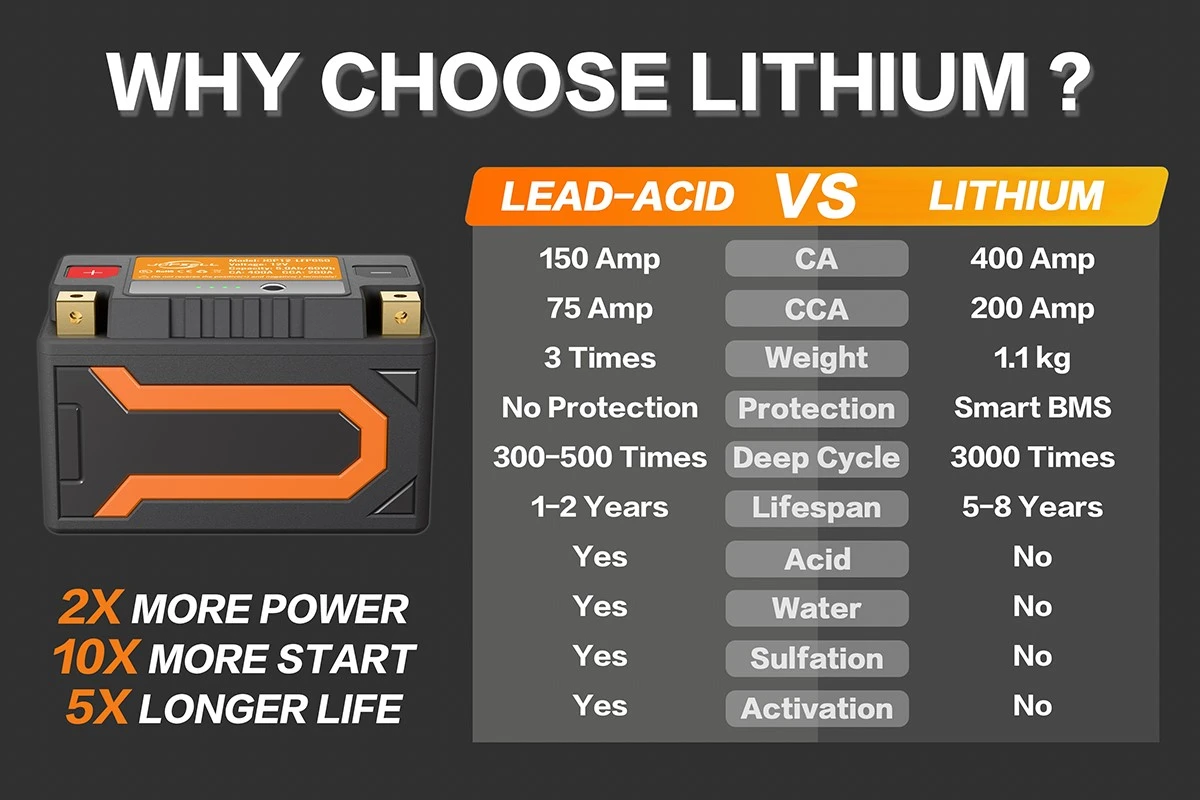
All motorcycle batteries have a lifespan. Lithium batteries can typically be cycled 3000 times, while lead-acid batteries can be cycled around 500 times. With increased usage time, the efficiency of the internal chemical reaction decreases, and the capacity gradually reduces. When the battery capacity is insufficient, a voltage drop will occur when starting the motorcycle, preventing the vehicle from starting.
Solution:
Regularly check the battery voltage and capacity, and use a professional battery tester to check the remaining capacity.
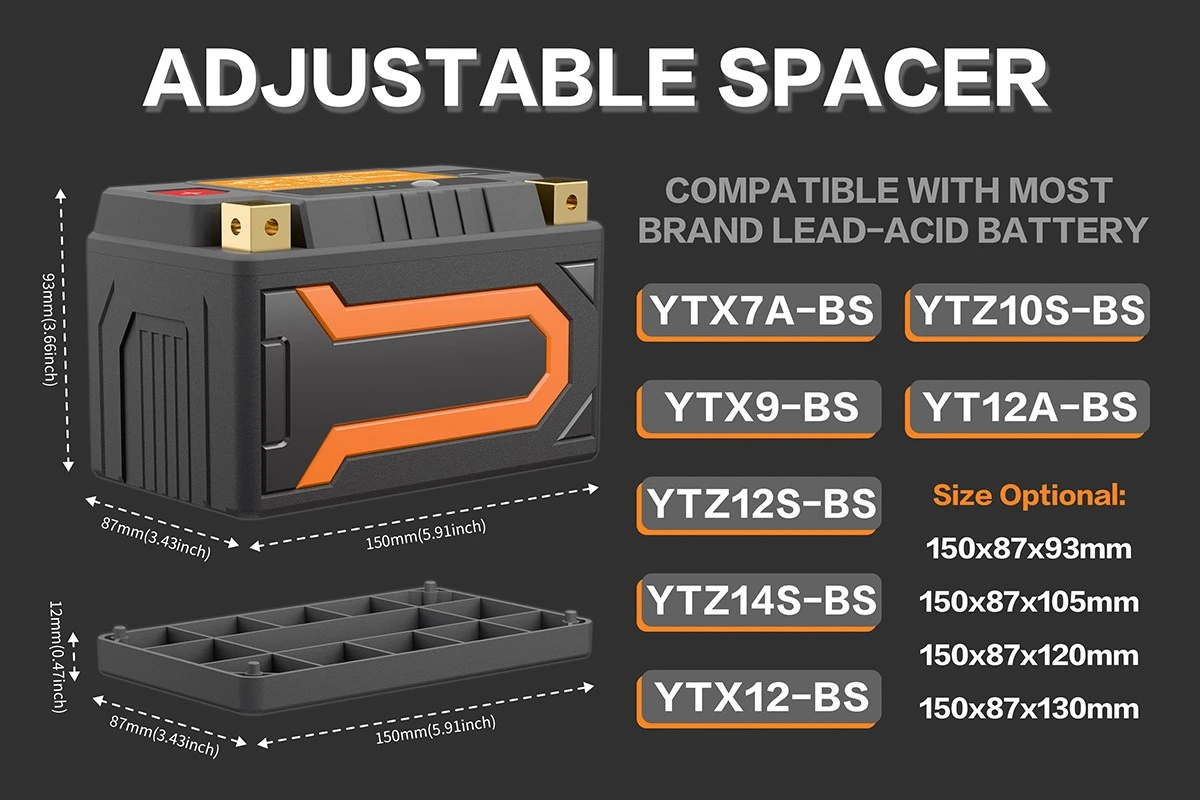
Batteries that have exceeded their lifespan or whose capacity has significantly decreased should be replaced promptly. Choose a model that matches your motorcycle.
Using high-quality lithium batteries can extend their lifespan and reduce the risk of sudden battery death.
2. Natural Discharge Due to Prolonged Inactivity
Cause Analysis:
Motorcycles that are not started for extended periods will cause the battery to naturally discharge. This is especially true for lead-acid batteries; if left unused for several days or even weeks, the voltage may drop to a level where the engine cannot be started. Solutions:
Troubleshooting:
Start the motorcycle regularly or use a smart charger to maintain battery power.
If the motorcycle is not used for an extended period, it is recommended to charge the battery every 1-2 weeks to keep the voltage within a safe range (lithium batteries are generally between 12.8-13.6V).
3. Charging System Failure:
Causes:
Motorcycle batteries rely on the vehicle's charging system (generator/regulator) for power. If the charging system malfunctions, such as a damaged regulator or insufficient generator output, the battery will not receive enough power, potentially leading to sudden battery depletion over time.
**Solutions:**
Use a multimeter to check the battery voltage while the motorcycle is running. A normal charging voltage should be between 13.5-14.5V.
If the voltage is too low or too high, check the generator, rectifier, or regulator for proper functioning.
Repair the charging system promptly to prevent battery damage due to charging failure.
4.Loose or Poor Battery Wiring:
Causes:
Loose, oxidized, or poorly connected battery cables can cause unstable current flow, resulting in the motorcycle suddenly failing to start and the battery appearing to be dead. Especially in winter or high-humidity environments, contact points are prone to oxidation.
Solution:
Regularly check the battery's positive and negative terminals to ensure they are securely fastened.
Clean the terminals and protect the contacts with anti-oxidation oil or conductive grease.
For lithium batteries, ensure the use of original or compatible interfaces to avoid poor contact that could cause momentary power loss.
5. Insufficient Battery Capacity
Cause Analysis:
Some motorcycles require a high current to start. If the battery capacity is insufficient or the battery specifications are incompatible, the instantaneous discharge current cannot meet the demand, resulting in a "no power" situation when starting the engine.
Solution:
Select a battery with a capacity and discharge rate that matches the motorcycle's requirements.
High-performance lithium batteries (≥40C high-rate discharge) can meet the starting needs of motorized motorcycles or in winter.
Avoid prolonged use of the battery at low charge levels and recharge it promptly.
6. Operating Environment
Cause Analysis:
Low-temperature environments significantly reduce battery output capacity. Lithium batteries experience a decrease in discharge capacity below -20℃, and lead-acid batteries are prone to momentary power loss below 0℃.
Solutions:
Use a battery heater or insulation in winter.
Select a lithium battery with good low-temperature performance to ensure it can still provide high current output in cold environments.
Avoid storing the battery for extended periods in extreme temperatures.
Sudden battery death in motorcycles can have various causes, including battery aging, prolonged disuse, charging system malfunction, loose wiring, insufficient capacity, and the effects of low temperatures. As a professional lithium battery manufacturer, we recommend users:
Regularly check battery status and replace aging or insufficiently charged batteries promptly.
Maintain battery charge, especially when not riding for extended periods.
Check the charging system and wiring to ensure a stable battery supply.
Select battery specifications according to usage needs, meeting high-rate discharge and low-temperature starting requirements.
Proper battery maintenance and selection can significantly reduce the risk of sudden battery death in motorcycles, making your travels safer and more reliable.